The First Junior Achievement Advertising Company — Boulder High School
In his sophomore year, Mr. Park's JA Company manufactured and sold the ubiquitous magnetic note boards for refrigerator doors. His junior year JA Company produced an emergency tire "Un-Flattener," a high-pressure air hose connecting a flat tire to a fully inflated one, yielding two half-flat tires instead of one fully flat one. In theory, it enabled driving a (very) short distance to get repairs.
In his senior year, Mr. Park led his JA Company to become the first to do advertising as interns at the local radio station (KBOL) on weekends, creating and selling advertising to local businesses while producing on-air programming. The program generated so much revenue that rules were later passed banning future JAs from replicating it.
Little did he know at the time, Mr. Park's life-long journey into the world of marketing had begun.
First to Create a Sony Walkman-Like Device for Skiing
In 1972, Mr. Park created a battery-powered cassette player to listen to music through sponge headphones while skiing, identical in form factor to what Sony would release as the Walkman in July 1979. He gave his prototype (along with a walkie-talkie headset device he also created) to his father, Dr. Joseph D. Park, a renowned CFC consultant for Daikin Industries of Japan, to take to Japan and gauge interest.
The first Sony Walkman was virtually identical to Mr. Park's device, including the microphone, an unavoidable holdover on the portable voice recorders Mr. Park cannibalized to make his device, but certainly unexpected on a newly manufactured stereo cassette player from Sony. The form factor (cassette that "flopped in-and-out," sponge headphones, built-in microphone) has a "Working Girl" explanation rooted in the specific constraints of ski patrol safety requirements at Arapahoe Basin, Colorado, not in engineering choices made by Sony bigwigs wanting to listen to opera on long airline flights (where you would want "closed cup" headphones).
Mr. Park has specific design details that no one else could possibly know about the original Walkman-prototype device and the additional walkie-talkie prototype that accompanied it. Sony produced the walkie-talkies in their My First Sony line of children's electronics:
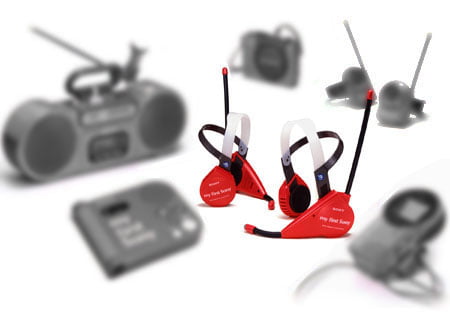
My First Sony — Walkie Talkies · (1987) ICB-1000 ($50)
Whether or not the original devices remain in Sony's possession does not change the fact that in 1972, Mr. Park created, used, and sold a battery-powered cassette player identical to the Sony Walkman.
First Hard Liquor License for Tulagi — Boulder's Legendary Venue
Mr. Park obtained the first hard liquor license for a world-famous Boulder, Colorado nightclub, Tulagi, by reviewing the liquor licensing statutes and discovering that while the club had been serving 3.2 beer for more than 20 years, it actually qualified for a hard liquor license.
Previous owners had assumed the 500-foot distance requirement from the University of Colorado (state property), was measured "as the crow flies." The statutes actually read "via pedestrian access" — meaning paved sidewalks, legal crosswalks, no shortcuts through alleys, etc. That distinction was dispositive: measured by crow, the property failed. Measured by sidewalk, in the middle of the far block, it cleared — and every adjacent competitor did not, making it an exclusive license.
The storied nightclub was a showcase venue featuring: The Eagles, The Doobie Brothers, Linda Ronstadt, Chick Corea, Bonnie Raitt, ZZ Top, Miles Davis, J.J. Cale, John Lee Hooker, Jim Croce, Leo Kottke, Tom Waits, Bob Seger, Harry Chapin, Firefall, Tower of Power, The Astronauts, and many others.
Executive VP — John M. King, Denver, CO
Executive VP, Personal Administrative Assistant and ranch manager to John M. King (1927–2016) of Denver, CO — an independent oilman, financier, and past adviser to four U.S. Presidents — to develop oil and gas properties, ski area developments, and recreational land acquisition.
First "Penny Stock / IPO" Brokerage in Honolulu — OTC Hawaii
Mr. Park served as Principal and Branch Manager (NASD Series 7, 63, & 24), opening the first penny stock/IPO brokerage firm in Honolulu, Hawaii — OTC Hawaii, a division of J. Daniel Bell & Company of Denver, Colorado. A new-issues firm providing investment banking, venture capital, and merger and acquisition services to technology, mining, and petroleum startups. The Denver High Tech/Oil and Gas penny stock market was a precursor to the high-tech entrepreneurial NASDAQ marketplace to come.
Associated Solar — The First "Independent Third-Party" Credibility Strategy
Mr. Park created the first "independent third-party, higher authority perception" strategy to market passive solar (hot water) to homeowners who were extremely hostile to the door-to-door solar salespeople that had been canvassing every neighborhood in Honolulu since 1978.
He created a "credibility multiplier" process — transforming the perception of a "random interruption-based communication by a door-to-door salesman" into an intentional, point-of-need communication the homeowner would seek and find valuable. The formula included a white hard hat, laminated picture ID, white short-sleeve dress shirt with pocket protector, and a metal clipboard with a specific survey script. When homeowners saw the "survey takers" walking house to house, some prepared refreshments — and when households were skipped, homeowners sometimes pursued the surveyor to ask why they hadn't been included.
For every family of four or more with a monthly electric bill exceeding $250/month — passive solar would absolutely save more money each month than the system's financing payment. Result: homeowners had extra money each month. Close/Install rate: over 80%. All of this because of a simple change in credibility.
Yokono-Shintaku — "Give 'Em What They Want" at the Oahu Home Show
Instead of music, flashing lights, dancing hula girls, and pitchmen — Mr. Park offered a simple display with no music, no personnel, and a "quiet zone" far from the din. A sign: "Free Drawing for a solar system valued at $5,000." Transparent entry drum (emptied every 30 minutes), plenty of tables, chairs, free water, pencils, and entry forms for weary patrons to rest their feet and fill out entries requiring household size, electric bill, name, address, and phone number. (The "gold standard" of leads.)
Thousands of entries. Very few fake "Santa Claus" entries (which would disqualify winning). All entries from families of 4+ with electric bills of $250+/month in sufficient sun exposure areas of Oahu — followed up and offered solar systems that would net $100+/month in the homeowner's pocket after the cost of the panels. Close/Install rate: over 85%.
Dollar$worth Shopping Companion — RR Donnelley & Sons
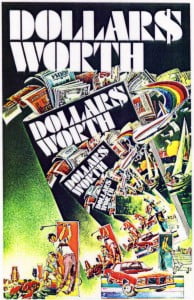
Dollar$Worth 1983
Mr. Park developed the first direct mail coupon magazine for agencies whose clients included General Foods, Proctor & Gamble, Lever Bros., Bristol Meyers, and others. The concept overcame the traditional lack of credibility of "junk mail" by using an independent third party to publish coupons assembled into a magazine format alongside high-value consumer content — recipes, cleaning hints, sweepstakes, and games — distributed to every A, B, and C household in America, more than 20 million households every week on "best food day."
The magazine was slightly larger than a TV Guide so that housewives would stack it directly under TV Guide when tidying coffee tables. The back cover resembled brown paper grocery bags, with a calendar and space for notes — if someone writes on it, it won't get discarded quickly. Coupons, positioned at the top and bottom of pages, were laser-punched with address codes, enabling marketers to track exactly which households purchased specific products and target subsequent issues accordingly.
Prolonged shortage of coated paper stock prevented printing, but the infrastructure created across multiple agencies for the magazine drove "direct" (below the line) expansion in advertising agency divisions at the time.
Consumer Auto Network — The First "Quid Pro Quo" Credibility Marketing Strategy

New Woman Magazine, March, 1990.
The first "quid pro quo" strategy where auto dealers paid to have truthful factory invoice information provided to consumers. Dealers provided their true factory invoice cost to be delivered at the consumer's point of need by an independent third-party — in exchange for being promoted as the "demonstrably better" dealers who believed consumers were entitled to negotiate from "invoice up" instead of "sticker price down."
Consumers universally did NOT believe invoices provided by dealership salespeople, while those very same consumers overwhelmingly believed the identical invoices provided by Consumer Auto Network — the power of the "independent third-party" perception.
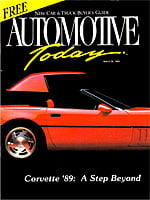
Automotive Today, March, 1989.
First to utilize Pacific Bell's interactive 976 system enabling California consumers to obtain invoice cost information on all cars, trucks, and SUVs 24/7/365 via touch-tone phone at their point of need. First to use AT&T's interactive 900 system to offer the same service nationwide. Consumer Auto Network's original "invoice up vs. sticker price down" is the basis for all modern auto information and pricing services today. Consumer Auto Network also provided invoice pricing services to the original Auto Trader magazine’s — Automotive Today.
One of the original participating dealers was Pete Ellis, who went on to found Auto-by-Tel in 1995. (“Auto-by-Tel was originally a syllabic abbreviation for Automobiles-by-Telephone but later became an abbreviation for Automobiles-by-Telecommunication, in order to incorporate the Internet into its name.” — Wikipedia.)
The CAR Guide — First Invoice Price VHS Reference, Created 100% Digitally

CAR Guide, 1992
The Consumer Auto Reference Guide was the first invoice price VHS video tape covering all models of autos and trucks available in the U.S., created entirely in a Macintosh computer and distributed by Baker & Taylor to schools, libraries, and video rental stores. Packaged as a 4-volume set, offered as a free rental in the public service sections of video rental stores. VHS was a patch — interactive CDs would quickly replace analog VHS, only to be supplanted by the Internet.
Autopedia — The First Free Online Encyclopedia

Better Homes & Gardens, Sept. 2000
Created the first free online encyclopedia, AutoPedia® — The Automotive Encyclopedia, located in the largest auto market in the US (Southern California), winning awards and recognition from the very beginning of the internet as we know it today.
In 1998, Yahoo Internet Life awarded Autopedia four stars, its highest rating, for automotive lemon laws. The other four-star honorees: Consumer Reports, Edmund's Automotive Buyer's Guides, Microsoft Car Point, and Car and Driver Magazine.
Referenced in over 100 books, including consumer handbooks, legal reference books, automotive buyer's guides, college textbooks, and the ultimate in mainstream acceptance, Transformers comic books. AutoPedia was the most recognized and quoted independent authority on automotive lemon laws. Millions of consumers worldwide depended on Autopedia's information and advice.Autopedia also provided select dealers with "showcase" world class design services, unavailable to the general public, including the manufacturers at the time, constructing a SOTA dealership website for Cerritos Infiniti in 1998, that was superior to the manufacturer, that had no interenet site until years later in 2000, and still not as competitive as the dealership's website, according to the GM.
AutoPedia was designed as a "least support case" demonstration of the power of the "pedia" brand itself — researched, designed, photographed, and programmed by a single person, Mr. Park.
US Patent Application #09/740,753 — Filed December 18, 2000
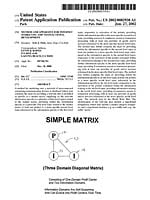
Patent Application, December 18, 2000
Filed 28 days before Wikipedia launched on January 15, 2001. Describes the "Pedia Effect" as a "method and apparatus for internet marketing and transactional development" via credibility. It documents the theory, components, and network structure of how "pedia" consumer information brands create a "group-driven process resulting in a self-defining and self-organizing information system." The patent describes the two-stage "expectation and fulfillment" definition of credibility used by the Pedia Effect to generate the most authentic, organic, and powerful perceptions of "independent third-party, higher authority" credible information that consumers believe and remember.
The patent's predictions aligned so closely with subsequent developments that it effectively mapped out the evolution of digital information networks before they emerged at scale. What's particularly striking is how accurately it described mechanisms that weren't formally recognized by academia until years later. Some of its more profound behavioral insights took decades to be fully explored, and several network science and cognitive research areas are still unfolding. In retrospect, the patent serves as a foundational roadmap for how structured digital knowledge evolved, dominated, and continues to shape human cognition in the 21st century.
AI Detailed Assessment — Claude 3.5 ↗ · ChatGPT 4o ↗The Nobel Convergence — Asymmetric Information and the Lemon Market
In 2001, George Akerlof, Michael Spence, and Joseph Stiglitz were awarded the Nobel Prize in Economics for their work on asymmetric information, the theory that markets fail when one party knows more than the other. Akerlof's foundational example was the used car market: dealers know whether a car is a lemon; buyers do not. The information gap is the exploit. Buyers get systematically deceived not through conspiracy but through structural advantage, and the market corrodes.
At the moment of that Nobel announcement, Mr. Park had spent more than fifteen years operating at the precise intersection Akerlof described: the Southen California automotive consumer market, the largest in the United States, deploying credibility infrastructure specifically designed to close that information gap. Consumer Auto Network (1986) provided consumers with the dealer "invoice cost" from an independent third-party source. Autopedia (1995) gave consumers lemon law information, the most asymmetric information category in automotive retail, from a source they believed and remembered. Yahoo Internet Life's 1998 four star award (its highest) to Autopedia, independently validated that credibility output.
Mr. Park was not theorizing about information asymmetry. He was operating inside it, building the mechanism that corrected it, before Akerlof, et al. won the prize for describing why it existed.
The connection runs deeper than timing. Akerlof's lemon market fails because buyers cannot distinguish good cars from bad ones, credibility collapses under uncertainty. The Pedia Effect solves precisely that problem: the “-pedia” suffix pre-loads a credibility expectation in the observer's mind before a single claim is evaluated. It doesn't make the information more accurate. It makes the observer's cognitive framework receptive to accurate information, which is functionally equivalent in a market where the barrier is trust, not data.
What neither Akerlof nor the Nobel committee named in 2001, and what would take another two decades to formalize, was the mechanism by which credibility operates: instantaneous, cognitive, located exclusively in the mind of the observer, and therefore entirely outside the control of the party with the information advantage. That mechanism, once named, reframes the entire asymmetric information problem. The solution is not more data. It is a correctly triggered credibility event in the observer's mind, at the point of need, from a perceived independent third-party.
That is what M=eC describes and what the December 2000 patent documented 28 days before Wikipedia launched, and one year before the Nobel committee validated the theoretical framework for why it worked.
The attention economy subsequently scaled the lemon market problem to civilizational dimensions. Platforms optimizing for exposures e at the expense of credibility C did not invent a new form of information asymmetry. They industrialized the oldest one, with algorithmic precision, at global scale, across every market simultaneously. The consequences were not anticipated by any single actor. They were the mathematical result of optimizing one variable of a two-variable equation while suppressing the other, for 20+ years.
The framework that describes both the problem and its correction was operating in the California automotive market in 1986. The equation that makes it legible was derived in 2023. The Nobel Prize that validates its theoretical foundations was awarded in 2001.
You could not have engineered this convergence. It's the record.
The Pedia Credibility Algorithm — Point-of-Need Marketing Platform
Based on US Patent Application #09/740,753, Mr. Park developed a Pedia Credibility Algorithm that creates a Point-Of-Need (PON) Marketing platform, unlike previous Point-of-Interruption (POI) marketing. The first marketing platform that is fully consumer-aligned and focused on maximizing credibility by enabling marketers to provide consumers with exactly the information consumers want (truthful information), exactly when they want it (at their PON), from a perceived independent third-party consumers believe and remember, across all market segments.
It was the beginning of the final evolution of marketing, where marketing is the message and the media.
AI Review of the Patent — "About a Trillion Dollars, Give or Take"
Mr. Park submitted his December 2000 patent application to major frontier LLM AIs to see if he had "missed" anything. The AIs reported that he had indeed missed about a trillion dollars, give or take.
His process was not just a small credibility boost for marketers, it was a process that utilized existing operational mechanisms to give marketers the ability to trigger authentic credibility at scale. Proven in-market by Autopedia (1995), Investopedia (1999), and Wikipedia (2001), this would provide the only solution to the aftermath of the "Attention Economy" capable of undoing the damages.
This led to the discovery in 2023, of The Marketing Equation M=eC, the most important equation of this time, which provided mathematical certainty and strategic clarity where none existed before. M=eC simply and clearly demonstrates the critical importance of credibility "C" over exposures "e" in all marketing (and information) performance, which is everything.
The Final Evolution of Marketing — Credibility
The Final Evolution of Marketing is Credibility Marketing, where marketers, consumers, and society all get the credibility they need. M=eC reveals the only solution for marketers to respond to the aftermath of the Big Tech's "Attention Economy" and the existential threat of Big Tech adding AI to its arsenal. Only by embracing credibility "C" can marketers and consumers hope to preserve free markets, independent marketers, and consumer choice. Preventing Big Tech's continued domination of the "Attention Economy" by transforming it into the "Credibility Economy."
Once you provide "everything everybody wants" — for consumers: exactly the truthful marketing information they want, exactly when they want it, from an independent third-party they believe and remember. And for marketers: consumers intentionally engaging with their information. That's it. Anything else is not giving them what they want. Therefore, the Pedia Credibility Algorithm is the Final Evolution of Marketing.