
A prominent commentator and analyst of advertising and marketing. For 25 years, his weekly AdReview in Advertising Age evaluated thousands of ads worldwide. Over the past decade he chronicled the digital revolution, culminating in his landmark 2009 book The Chaos Scenario. His previous book, the 2003 manifesto And Now a Few Words from Me, is published in eight languages. His book Can't Buy Me Like, co-authored with Doug Levy, was published in March 2013.

The Ad Contrarian — author, speaker, and partner in Type A Group. He has written five Amazon #1 bestselling books about advertising. Previously Chairman/CEO of Hoffman/Lewis advertising. His 2017 book BadMen discussed the dangers of "surveillance marketing" two years before Shoshana Zuboff's The Age of Surveillance Capitalism.

An American writer, consultant, and teacher on the social and economic effects of internet technologies. He teaches New Media at NYU's graduate Interactive Telecommunications Program. His columns have appeared in Business 2.0, the New York Times, the Wall Street Journal, the Harvard Business Review, and Wired.
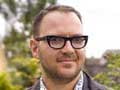
Science fiction author, activist, journalist, and blogger — editor of Pluralistic. Author of Attack Surface, Walkaway, and non-fiction including How to Destroy Surveillance Capitalism. Former European director of the Electronic Frontier Foundation.
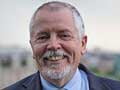
American journalist, columnist, and blogger. Co-author of The Cluetrain Manifesto, author of The Intention Economy: When Customers Take Charge, Editor-in-Chief of Linux Journal. Thomas L. Friedman calls Doc "one of the most respected technology writers in America."
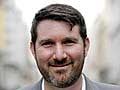
Author, activist, and entrepreneur focused on making technology and media better serve democracy. Executive director of MoveOn.org in 2004. Co-founder of Upworthy and Avaaz. Author of The Filter Bubble: What the Internet Is Hiding from You, where he introduced the term "filter bubble" to the lexicon.

Polish-American web developer, entrepreneur, speaker, and social critic. Owner of the bookmarking service Pinboard. In these two videos Maciej talks about the dangers of surveillance and data that is stored forever.

Global Business Columnist and Associate Editor at the Financial Times, and CNN's global economic analyst. Her book Makers and Takers: The Rise of Finance and the Fall of American Business was shortlisted for the Financial Times McKinsey Book of the Year award in 2016. Previously spent 6 years at TIME and 13 years at Newsweek.
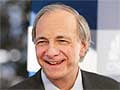
Founder, Co-Chairman, and Co-Chief Investment Officer of Bridgewater Associates. Started Bridgewater out of his two-bedroom apartment in 1975; under his leadership it became the largest hedge fund in the world. Author of the #1 New York Times bestseller Principles: Life and Work.

Founder and President of Edelman PR, the world's largest PR firm. Publisher of the Edelman Trust Barometer® — annual surveys gauging attitudes about trust in business, government, NGOs, and media across 23 countries.

Professor of Marketing at NYU Stern School of Business. Author of The Four and The Algebra of Happiness. Named "One of the World's 50 Best Business School Professors" by Poets & Quants in 2012.

Author of The Age of Surveillance Capitalism: The Fight for a Human Future at the New Frontier of Power. Her life's work integrates the digital revolution, the evolution of capitalism, and the conditions for human development. Ph.D. in social psychology from Harvard University.
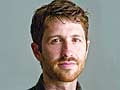
Called "the closest thing Silicon Valley has to a conscience" by The Atlantic. Spent three years as a Google Design Ethicist. Now co-founder & president of the Center for Humane Technology, whose mission is to reverse "human downgrading" and re-align technology with humanity.

Contributing opinion writer at the New York Times, associate professor at the School of Information and Library Science at UNC Chapel Hill, and faculty associate at Harvard's Berkman Klein Center. Author of Twitter and Tear Gas: The Power and Fragility of Networked Protest (Yale University Press, 2017).

TED is a nonprofit devoted to Ideas Worth Spreading. Started in 1984 as a conference bringing together people from Technology, Entertainment, and Design.